Selasa, 16 Maret 2010

Digital camera binoculars

As any binocular enthusiast knows, there are all kinds of binoculars to fit just about every need out there. There are waterproof binoculars for aquatic sports and hobbies, night vision binoculars for hunting or observing nocturnal wildlife, compact binoculars for travel, and tons of other types in between. One of the newest types of binoculars available are camera binoculars.

Digital camera binoculars are a fairly new addition to the binocular market, but are gaining in popularity. They combine the ability to see objects at a distance with the ability to capture them digitally, so you can capture exciting moments and share them with friends and family via e-mail or photo sharing sites like Flickr, or include them on your own Web site.

Camera binoculars work much the same way regular digital cameras do. Depending on the model you choose, camera binoculars can offer from one to four megapixels. The more megapixels, the better the photo resolution. Like digital cameras, some camera binoculars have liquid crystal display (LCD) screens, so you don't have to actually look through the binoculars to see what you're photographing. The LCD screen allows you to easily focus and center the image you want to photograph.

Most camera binoculars have a magnification of 7x to 10x, which is good for general viewing. Some even offer the ability to record video in addition to still photos. Whether they're set up for photos or video or both, camera binoculars will come with a cable that allows you to connect the optics to your computer to retrieve all the images you record with them.

Some camera binocular models have a slot for a memory card, making the transfer of data even easier and more convenient. Most also include about 16MB of internal memory, so if you forget the memory card, you can still get a few photos if the need arises. As with a digital camera, it's a good idea to carry extra memory cards with you. When you're out on the trail, or at a concert or other event, you want to make sure you have enough space to store all the photos you want. The worst thing is to have to delete photos to make room for new ones. Don't get caught in that situation. Memory cards aren't that expensive, and you can store them in the binocular case.

Speaking of cases, it's a good idea to have one for any pair of binoculars, but especially for camera binoculars. They have more electronics and mechanisms than standard binoculars, which could be damaged if the binoculars fall or are bumped with other objects when they're stored. Binocular cases will protect your investment, and ensure your optics last for many years to come.

If you really want to go all out and combine binoculars with digital camera technology, there are some high end models out there that offer the best of both worlds. Some camera binocular models offer a keypad specifically for controlling the camera. It gives you more control over the photos you take, and the quality of the images. They may also include auto focus, which is great for wildlife viewing and photographing. When an animal appears in your view, you may not have time to focus and get everything just right to snap the picture before the animal disappears again. Depending on how you intend to use your camera binoculars, it may be worth paying a little more for more features and easier use.

Derek Robinson is a keen outdoorsman who contributes regularly for many websites including The Binocular Site which is the premier consumer site about binoculars, monoculars, spotting scopes and much more at http://www.thebinocularsite.com


Making Money from your Photos for Beginners

The best, fastest and potentially most profitable way of making money from the photos you have taken over they years is to simply submit them to stock agencies that sell them for use in commercials and ad campaigns. The easiest of the agencies to enter are the "microstock" agencies. Agencies selling images at low price, but at a high volume. I am currently the world's top selling microstock photographer and yes it is quit profitable, in fact I make more then 1mil USD per year from royalties. The purpose of this post is to give you a two minute, super quick overview of the landscape of microstock and a list of the microstock agencies that are worth submitting to.

The non-exclusive microstock distribution channel (submitting to a lot of agencies, such as I do) still remains the best income provider, despite the higher commission of the exclusivity offers out there.

Finding where to sign up at these agencies can sometimes be a little difficult, so I have provided some names to sign-up with at the bottom of this post.

The income speaks for itself but you should always take into consideration the time it takes to organize, upload, attach model releases and assign categories at the different agencies. Some agencies have made it extremely easy to upload and organize your images, including Crestock and 123RF. Other agencies have not thought so hard about this aspect and it can therefore be quite time consuming to get your files submitted for inspection. Files have to be categorized and organized before they are evaluated by the editors where they may or may not get rejected.

If you have just spent hours organizing your files and a lot of them get rejected afterwards it can be quite frustrating.

The most cost-efficient (time spent uploading vs income) agency to upload to is Shutterstock, followed by StockXpert and Fotolia. The least cost-efficient is Snapvillage and Istock. This does not mean that you should not submit to these agencies, but just that you should take this into consideration if you have to do all the uploading yourself. The Yuri Arcurs Distribution Network does keywording as well as uploading for very good stock photographers joining microstock. Good Luck in microstock!

What Should I Shoot and What Sells Well?

Branding Microstock is filled with loads of imagery and literally millions of images so if you don't stand out you will be "lost in the crowd" completely. Branding yourself by having a unique style that is recognizable and consistent is probably the most important aspect in microstock and also something that makes it so hard for traditional shooters to enter micro.

You cannot underestimate the importance of branding yourself! If you do, you will wonder, "why am I not selling anything?" The reason is that you have not made enough of an impression on buyers so that they go directly for your images when searching for material to buy.

So here is the breakdown: Step by step plan for getting started

  1. Find something you can shoot effortlessly. Your hobby, the sports you do, your friends, family and their life. Shoot the things you know something about, so you can make it look real, natural and genuine. Write down the things you should be able to shoot quite effortlessly.
  2. Decide on a style and a limited range of subject matter and stick to it. Microstock is getting competitive so specialize yourself in your field so you can become very good at shooting it. A shoot never goes quite as planned and you often have to "play the hand you are dealt" to get some good shots out of it. You can do this with the things you know about from before but not very well with things you have little or no experience with. Write down the style and subject matter that you want to go with. Brainstorm!
  3. Shoot something new and find your spot instead of duplicating successful images. Duplicating is probably the fastest way to be unpopular in microstock and because microstock agencies have forums (unlike traditional agencies), this can be highly damaging for your branding. Don't do it!

There are a few overall categories of subject matter that are neglected in microstock:

  • Travel photography, special places and extreme nature
  • Really, really old people
  • Contemporary fashion
  • Policemen, military and state officials from all over the world
  • Pictures of currency other than Euros and Dollars
  • Aerial pictures
  • Stylistic still-life in soft and low contrast colors
  • Fantastic panorama shots in high quality
  • Motion-blurred and lively pictures
  • Artistically executed lifestyle, edgy
  • Natural looking people, that don't look like microstock models

There are a few over-represented categories where you really have to know what you are doing to compete efficiently.

  • Businesspeople (too easy to put a group of people in suits around a table)
  • Isolated people on white (too easy to duplicate and too many shooting it)
  • Anything with a laptop
  • Nudes
  • Spa (requires so little set-up and every model in the world wants a spa shoot)
  • Medical (Too easy: a scrub and a model)
  • Backgrounds and "lonely tree" kind of pictures
  • Beach pictures (Really too easy)

Jacob Yuri Wackerhausen writes articles for selling your photos online, buy photos, buy images, buy stock, best stock photography and stock photography sites.

Fujifilm FinePix A303 Digital Camera

Two years ago I purchased my first digital camera. At that time, prices for a 3.0 and higher mega pixel camera were around $350. Since then, as with all electronic gadgets, prices have dropped significantly while the mega pixels have gone up. I chose the Fujifilm's A303 digital camera, which has fared well for me, so permit me the opportunity to tell you why.

I desperately needed a digital camera when my web business took off. On many different occasions I found myself wanting to take a picture of a person, place or thing and having to rely on a 35mm camera. Trouble was I wasn't very good at taking pictures. Usually my subject came out blurry or the picture needed cropping. Yes, getting pictures developed on disk would have resolved the latter problem, but it was the former problem -- blurry pictures -- that was causing me the most grief. If only I could see "on the spot" how my picture turned out. If it turned out poorly, I could reshoot. Naturally, a digital camera presented to me something that no 35mm camera could offer; I made the purchase of a 3.2 mega pixel camera by Fujifilm after considerable shopping around and reading product reviews online.

Packed within a tough grey shell, the A303 is lightweight and can fit easily into your pant pockets. The camera's controls are simple to figure out and include a Menu/OK button, Back button, viewfinder, viewfinder lamp, a display buttion and LCD monitor to preview pictures without looking through the viewfinder or to review pictures already taken. A round dial in the back of the camera features a self timer mode where you can set the camera and ten seconds later have the picture go off. Great for when you want to get the entire family's picture and no one is around to take it. There are also close up modes, still image, playback and movie modes. The movie mode results in a fairly choppy and short film, but it is a neat feature to have nevertheless.

The standard camera comes equipped with a 16mb picture card. Most people will find that inadequate, so I paid a little bit extra and bought the 64mb upgrade. I also purchased rechargeable AA batteries -- it takes two -- and a recharger. You will sap your batteries quickly if you take 30-40 or more pictures at a time, so the recharger makes sense. I purchased the accompanying Fujifilm carrying case to house my other supplies.

Pictures come out clear and in two years of picture taking I have not experienced a single problem with the camera. At 3.2 mega pixels the pictures are more than adequate as virtually everything I do gets posted to the internet. Supposedly you do not need more mega pixels when posting/viewing pictures online. With the included USB cable and HP software, you will be uploading pictures to the internet in no time.

If there are any drawbacks with the A303 there is just one and it is a glaring problem: the time between shots can seem endless! I suppose the elapsed time is only about ten seconds, but it seems like an eternity especially compared to 35mm cameras. Technological improvements have closed the gap considerably with newer models, but if you need this camera to take a group of shots quickly you will be disappointed.

All in all, the A303 is a very good camera. I give it a 4-star rating for ease of use, price, and dependability.


Matt manages the Corporate Flight Attendant Community at http://www.corporateflyer.net and http://www.cabinmanagers.com in addition to the Aviation Employment Board at http://www.aviationemploymentboard.net

Senin, 15 Maret 2010

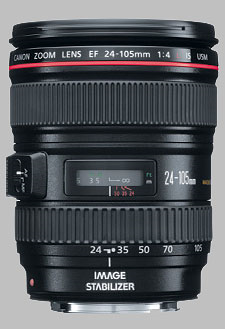
Canon 24-105mm IS

One of the most-requested lenses, the Canon 24-105mm f/4 L is one lens that easily justifies its price. Optically, this lens produces sharp and contrasty images, and the IS performs extremely well. I feel that it does exceptionally well at capturing people and weddings, as well as concerts. The bokeh produced by it's 8-blade diaphragm is extremely pleasing.

Canon EF 24-105mm IS

Features
  • 24-105mm standard zoom lens with f/4 maximum aperture for Canon EOS SLR cameras
  • 1 Super UD glass element and 3 aspherical lenses minimize chromatic aberration and distortion
  • Ring-type USM system delivers silent but quick autofocus (AF); full-time manual focus
  • Image Stabilizer technology steadies camera shake at up to 3 stops; weighs 23.6 ounces
  • Dust- and moisture-resistant; measures 3.3 inches in diameter and 4.2 inches long; 1-year warranty
Technical Details
  • Brand Name: Canon
  • Model: 0344B006
  • Lens Type: Zoom lens
  • Mounting Type: Canon EF
  • Minimum focal length: 24 millimeters
  • Maximum focal length: 105 millimeters
  • Minimum Focal Range: 17.7 inches
  • Maximum Aperture Range: F/4.0
  • Camera Magnify Power: 0.23
  • Lens System Special Functions: Zoom
  • Focus Type: auto-focus, manual-focus
  • Real Angle Of View: 84
  • Weight: 23.6 Ounces
  • Item Display Diameter: 3.3 inches
  • Length: 4 inches

Jumat, 12 Maret 2010

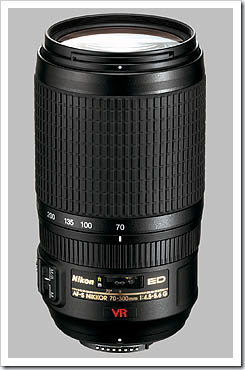
Nikon 70-300mm VR Zoom Lens

The 70-300mm range is a popular one for telephoto zoom lenses, and often represents one of the first lenses new SLR owners will purchase after the "kit" lens that came with their camera. On sub-frame digital SLRs, a 70-300mm covers a range from moderate to dramatic telephoto, the equivalent of roughly a 105-450mm zoom on a 35mm film camera. Out at the 300mm end, it can be a challenge to hand-hold a lens like this in anything other than bright sunlight, hence the value of the Vibration Reduction Nikon has added to this model. Combine that feature with low street prices hovering around $500, and you're looking at a real bargain.

Nikon 70-300mm

I also just bought one of these lenses. My wife and I are stocking up on lenses before our trip to the east coast. Expect lots of photos ;)

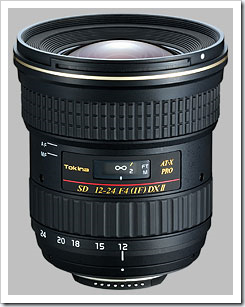
Tokina 12-24mm

The Tokina AT-X 124 AF PRO DX II lens is Tokina's first lens with a DC motor added for Nikon AF mount, which allows autofocus with the motorless Nikon D40, D40x and D60 digital SLRs. (The Canon version has always had a built-in AF motor.) Tokina plans on adding motors to all their Nikon mount AF lenses over time. Version II also features an improved multi-coating, for reduced flare and ghosting when shooting in backlit conditions.

Tokina 12-24mm f4.0 ATX Pro DX Zoom Lens

I just bought one of these myself and will post photos from it shortly.