Minggu, 10 Oktober 2010

A Simplified Guide To Quickly And Easily Understanding Your Digital Camera

A digital camera can appear complicated, but there are certain basic points that can be quickly learned and will help you become a better photographer. It is worth it to spend some time thinking about your camera's pixel count, white balance, sensor, sensitivity, optical zoom, digital zoom, etc. These features will improve your pictures and increase the enjoyment you get from your digital camera.

A digital camera's basic unit of measurement is its number of pixels. The clarity and resolution of your pictures improve with the number of pixels per square inch your camera has. Each pixel contains within it three color channels (red, green and blue) and carries a numerical value of between 0 and 255.

Digital camera manufacturers use the pixel count as one way to describe their product. The pixel count of low-end digital cameras are usually around 1 million, a number that seems large, but is strictly for beginners! Better digital cameras and those used by professionals range in the 14 million to 22 million pixels-per-image.

Pixel number also determines the quality of your pictures at a given size. For example, a 3MP camera can give you beautiful 4"x6" prints, but would not give you the same quality at 5"x7" or larger. A 4 or 5 MP digital camera is necessary for excellent quality bigger prints.

You should also be familiar with your digital camera's digital sensor. The sensor element in most digital cameras is small, about the size of a fingernail, which is much smaller than a 35mm camera's negative. Again, high-end cameras have the larger sensors, which produce better quality large prints.

Another helpful feature of your digital camera is the white balance. This is adjusted to suit the light source and keeps your colors true, ensuring that whites are pure and not yellow or blue looking. Generally, your digital camera adjusts automatically, but for a really beautiful shot, you can manually adjust to get results exactly as you want them.

A digital camera's sensitivity setting is similar to ISO ratings on film. Generally, the sensitivity settings of digital cameras compare to ISO100 and ISO 200. Some have a setting for ISO 400. A few digital cameras with large sensors (and large price tags) have a setting for ISO 3200 or ISO 6400.

Another very important feature to be familiar with is optical versus digital zoom. Both are important, but for different reasons. Digital zoom physically crops the image to a smaller size; this cropped image expands to fill the frame. This cool feature allows you to cut out ugly background or focus on a particular object in the frame that might not be centered. Depending on the amount you "zoomed" out, there may a significant loss of quality in your pictures. The optical zoom lens actually changes the magnification and focal length, drawing subjects in and out depending on your desire.

Picture image storage can also be an issue and it's important to familiarize yourself with the manner in which data is stored. Each pixel generates three bytes of data. A photographer using a modest 3MP will need an amazing nine million bites to store each picture! Compressing an image using a format called JPEG significantly reduces the file size, which causes a corresponding loss of quality. For some purposes, this loss is not important, but as a rule, it is not preferable. Digital camera manufacturers have come up with different storage format designed to minimize this data loss. The format is not uniform; for example, Nikon calls its process NEF, while Canon calls its format RAW.

Sabtu, 09 Oktober 2010

Panasonic Digital Cameras - The History Behind Their Cameras

Panasonic is a world-renowned consumer electronics company today. Its digital cameras have recently entered the market. In this article, we will view the story of Panasonic and some of the latest cameras which have been launched by the company in the market.

The inception of Panasonic took place in the year 1918 on a small work table in the house of Konosuke Matsushita. At that time, Matsushita invented the two-socket light fixture. This product became a success and Matsushita Electric Industrial Co. Ltd. was established.

Panasonic is the largest manufacturer of consumer electronics in the world today. The firm produces a wide array of products which cater to several needs of consumers. Its policy of achieving hundred percent customer satisfaction and providing optimal quality goods, has led Panasonic from strength to strength. In fact, the name Panasonic is synonymous with innovation, quality, performance and ease of use.

As far as digi cameras are concerned, Panasonic has got several types of digi cameras which can cater to various audiences depending on their budget and needs. In fact, Panasonic has also entered into an alliance with German camera maker, Leica to develop still digital cameras. The reason for this alliance is the fact that Panasonic is a small player in the digital market today. This alliance will help both Leica and Panasonic to take over an estimated ten percent of the digital camera market share.

Panasonic's latest line of digi cameras consists of mainly three series. One of these is the Lumix digital camera series. The Lumix camera makes use of lenses provided by Leica. This helps in getting images which are extremely clear and bright. The Lumix is a highly advanced camera and also comes with manual control options. Its shutter interval is also less than 0.04 seconds, hence allowing the photographer to take shots quickly.

Another series of digital cameras are cheaper and smaller, known as the D-Snap digital camera series. These cameras are trendy and small. They are super-slim and come in different colors. These cameras can also record videos and play music. The D-Snap digital camera is aimed at teenagers and youngsters who are looking for something smart and trendy and which also fit into their budget.

Slowly and steadily, Panasonic is establishing a name for itself in the digi camera world. This company, which has always believed in putting the customer's needs first, is sure to make a mark in this arena as well.


Kevin Rockwell worked as a network TV cameraman for 20 years shooting news and sports. Now a devoted fan of digital photography and video he works to gather information, tips and news for camera users. Oh and he loves to shoot pictures of his kids playing sports. Great Digital Cameras

Jumat, 08 Oktober 2010

Digital Cameras for Bird Watching


Image : http://www.flickr.com


Birds are notoriously difficult to great photos of. For avid bird watchers, are digital birding cameras the way to go?

Some photographers think so. Birds make difficult subjects because they are often spotted from quite a distance. In order to get a good quality shot, a lens capable of zooming must be used. However, it can be difficult to get a very close shot that looks crisp and clear when birds are often in almost constant motion. Digital birding cameras must not only be compact, lightweight, and able to withstand the elements but they must be able to zoom in without distortion and have a very quick shutter rate to capture quality photographs.

While a "point and shoot" camera will work well for capturing your children and household activities, it won't work for birding. If you are serious about capturing photographs of the birds you see, you will want to invest in one or more digital birding cameras that meet specific criteria. First, it is best to find a camera which is built to accept several different lenses. This will allow you to select the best lens for the type of photograph and subject you are photographing. Cameras should be well-built and as sturdy as possible. Digital cameras tend to be less durable than their film counterparts, but there are quality digital birding cameras which will hold up in outdoor conditions. While you want to make sure your camera is tough, size is also a consideration. The best digital birding camera is one that combines durability and compactness. In fact, many quality cameras are small enough to fit in the pocket of your pants or vest.

Make sure the digital birding camera you select has the ability to be set up to the specifications you need. You should be able to manually adjust the aperture. The aperture is basically where the lens opens. The diameter of the aperture is called the f-stop. You can become more familiar with these settings as you become more proficient with your camera, but you need to make sure that your camera allows you to set these yourself, rather than only having an "auto" setting. Adjusting these will allow the speed of your shutter to increase, which will let you take pictures much more quickly. You want the time that elapses from when you press the button to take the picture to when the camera actually takes it to be as small as possible. This will let you capture those birds who are in motion.

There are a few other things to look for when selecting a digital birding camera. Many cameras come with the ability to take rapid fire shots. You simply press the button once, and the camera will take multiple shots, one after the other. With a little practice, you can capture beautiful motion studies this way. Being able to adjust light settings is also crucial as you will not always be working in direct sunlight.

Although it may seem like common sense, perhaps the most important advice given to someone new to digital birding cameras is to be prepared. When going out into the field, bring plenty of spare batteries and memory cards. When you return home with your photographs, make sure you do a backup onto a disk or portable hard drive. Backing up your photographs is something that should be done each time you retrieve the photos from your camera so that you do not lose your shots if your computer should crash.

Kamis, 07 Oktober 2010

Should I buy the new Nikon D800 DSLR?

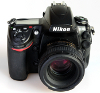
Nikon D800 Nikon is set to launch the D800 as the successor to the full-frame D700 DSLR (pictured) early next year, if online details of a D800 handbook are to be believed.


The 320-page D800 handbook will be published on 9 February 2011, according to an entry which appears to have been posted on an Amazon page. Written by Jean-Baptiste Guges the book is entitled Obtenez le maximum du Nikon D800, which loosely translates as 'getting the most from the D800'.


Details of the 17x21cm book, published separately, suggest that the D800 will carry a 24-million-pixel sensor (double that of the two-year-old D700) and will cost between Euros 2,000 and Euros 2,500.

Any such online postings should be treated with caution. It remains unclear as to why the upcoming launch of a handbook would appear more than three months before the suggested launch date of the camera. A Nikon UK spokeswoman told Amateur Photographer: 'Unfortunately we can't comment on potential future product.'

It appears that the relevant website links were taken down within minutes of Amateur Photographer exposing them.

Should you buy a D800 from Nikon? We just can say – yet!

Digital Photography Vs Film Photography - What's the Difference?

There was a time when film photography dominated the market. As digital photography has advanced film is starting to fade into the background. Film isn't completely extinct by any means. There are still a few professional photographers that use film. Let's look at the difference between the two.

The main difference between film and digital photography is the way the image is captured. In digital photography light is reflected onto a sensor. The sensor then converts the that image into digital information. Once the image is captured it can easily be viewed on the camera's LCD screen.

When you're using film cameras for photography the image is captured on film. Once the entire roll of film is used it must be processed in chemicals to see the image. Once the film is processed the image can be transferred to light sensitive photographic paper and viewed. When you're using a film camera you can't see the image right away.

The ISO setting on a camera helps control the sensitivity the camera has to light. When you're using a digital camera you can change the ISO setting in between every shot. You can preview your picture on the LCD and if you don't like the way it turned out you can change your ISO setting and take the picture again. You can do this again and again until you get it right.

When you use a film camera the ISO is determined by the speed of the film you're using. Film comes in speeds like 100, 400, and 800. These numbers show how sensitive the film is to light. The higher the ISO number the more sensitive the film. When you put a roll of film in your camera you must take pictures with the camera at that same ISO setting until the film runs out. You can't change ISO settings between pictures.

When you use a digital camera you can download your pictures onto your computer to print them or simply plug your camera directly into your printer and print them from there. The entire process can be done by anyone at home. If you don't want prints of your pictures that's fine too. You can email photos to family and friends. There are also plenty of website you can use for sharing your photos.

When you use a film camera pictures have to be developed in a darkroom. You need to take your film to a store that processes film. You can't do it at home unless you have a darkroom full of expensive equipment for processing pictures. It could take anywhere from one hour to a few days before you see your pictures depending on where you take them to get developed.

It was once thought that film photography was of much higher quality than digital photography, but digital cameras are advancing so quickly that is no longer the case. You can get lovely, high quality images from a high-end digital SLR camera. A good quality digital camera does cost much more money than film cameras though.

Rabu, 06 Oktober 2010

Nokia C2(C2-00) Dual Sim Phone Review

This Nokia C2 or Nokia C2-00 is another dual SIM phone released by Nokia. Nokia C2 comes with bluetooth, Expandable memory (Micro SD), FM Radio, MP3 player,3.5 mm audio connector. The standard sales of package of  C2_00 comes with Nokia WH-102 wire headset. This Nokia phone is based on series 40 OS. Let us have a Nokia C2-00 review on its specifications,features. The price of the Nokia C2_00 is discussed in later part of the post. Below are the some of the images of Nokia C2.

Nokia C2

Nokia C2 (C2-00) Features: 
  • Keep one SIM card inside the phone.
  • Swap multiple cards using the second hot swap-enabled SIM slot.
  • Use the shortcut keys to swap quickly and smoothly between active SIMs.
  • Manage the cost of your calls by choosing the right SIM card for you.
  • Take the web with you - connect to the internet through GPRS.
  • Browse, search, shop and share online with the mobile web browser.
  • Get the information that matters to you from Nokia's Ovi Life Tools.
  •  Keep the conversation going using the Ovi Chat IM application.
  • Stay in touch with Ovi Mail – your free email account from Nokia.
  • Capture special moments with the built-in camera.
  • Share photos and videos via email, Bluetooth or microUSB cable.
  • Store more with support for up to 32 GB of memory on a microSD card.
  • Build your collection on a microSD card, expandable to up to 32 GB.
Specifications of Nokia C2(C2-00):
          Display:
                    Screen Size: 1.8"
                    Resolution: 128 x 160 pixels
                    Up to 65,000 colours.
          Memory:
  • microSD memory card slot, hot swappable, max. 32 GB
  • Internal memory: 64/16 ram/flash
Applications:
  • Email (SMTP, IMAP4, POP3), SMS, unified editor
  • Data: Calendar, Contacts, To-do, Notes, E-mail
 Music features:

  • Nokia music player
  • Music playback file formats: .mp3, .wma, .aac, eAAC, eAAC+
  • 3.5 mm stereo headphone plug
  • Nokia Music Store support
  • Ring tones: mp3, aac, WMA
 
Radio:
  • Stereo FM radio (87.5-108 MHz/76-90 MHz), RDS
  • Radio recording feature
 Standard Sales Package of Nokia C2:

  • Nokia C2-00
  • Nokia Battery BL-5C
  • Nokia Stereo Headset WH-102
  • Nokia Compact Charger AC-3 (AC-8C in selected countries)
  • User guide Price
Nokia C2 (c2-00) price in India: The price is not yet disclosed. However the price of C2 is expected to 2500Rs.

Nokia C1 Dual sim Phone Review

One of the biggest mobile phone manufacturer Nokia released its first Dual Sim phones. It was much expected earlier. However better late than never. The New Dual Sim phone released By Nokia are Nokia C1-00 and Nokia C2-00 series phones.  In this we will go through the specifications and review on Nokia C1-00.Nokia C1 is a GSM dual SIM phone from Nokia.

The main specialty of this Nokia C1-00 or Nokia C1 is that it has two SIM cards running at same time in one phone. However you cannot use both SIM simultaneously.By pressing a key one can switch between the two SIMs.

Full Specifications of Nokia C1:
  • Network: GSM
  • Dual Sim (GSM+GSM)
  • Band: GSM 900/1800 MHz
  • Display: 1.8″ inch TFT 65k Color Display
  • Symbian Series 30 Platform
  • FM Radio
  • Torch Light
  • 3.5mm Audio Connector
  • Polyphonic Ringtones
  • 500 PhoneBook Memory
  • Battery: Li-Ion 1020 (BL-5C)
  • Standby battery time of up to six weeks
  • Weight: 72.9 grams
Content of the sales Package of Nokia C1:
  • Nokia C1-00
  • Nokia Battery BL-5C
  • Nokia Compact Charger AC-3
  • Nokia Stereo Headset WH-102
  • Compact user guide
Nokia C1 price in India is 1700Rs.